
It has been a long time since I last posted. I’ve been going through a major transition, and life has been a bit upside down lately—but I am doing okay.
In fact, I wanted to share a beautiful moment from my job today.
On Sundays, I work exclusively in the memory care unit at a senior living community. It is always a full, busy day. But every now and then, something sparks, I get the chills, and I witness a truly magical day. Today was one of those days.
We made “Mayan Worry Dolls” in our art therapy program.
First, we looked at a worksheet about the history of the dolls. Then, I asked the residents to reflect and write down one or more of their worries. This mindful step helps them see the purpose behind the doll—giving their worries away so they can carry less.
What kind of worries would you expect from seniors with cognitive deficits?
At first, the majority reported they had “no worries.” But with a little gentle prompting, the real answers began to surface.
- The physical: One resident shouted out, “I’m worried about my knees.” Physical ailments are a massive daily reality for this population.
- The structural: Another resident admitted she was worried about “falling.” (Which, honestly, is a major worry for us as staff, too!)
- The emotional: But my favorite—and most profound—answer came from a resident who recently moved into our unit. He said, “I’m worried that a person isn’t being honest with me.”
That last answer stopped me in my tracks.
The paranoia that comes with dementia is incredibly real. When the brain is damaged, it struggles to process reality. As professionals, we walk a delicate tightrope trying to explain things with adult dignity without causing unnecessary trauma.
For example, memory residents often say, “I want to go home.” They don’t recognize that this community is now their home.
Why agitate someone with blunt, harsh facts when you can pivot and provide comfort instead? Yes, we sometimes rely on “therapeutic white lies.” How do you tell someone with Alzheimer’s or vascular dementia that they are too much of a risk to live independently anymore?
Every professional has their stock answer to redirect the confusion. Mine is usually: “You can’t go home just yet, you have a dinner reservation here tonight!” It almost always shifts the mood from panic to excitement.
But when this new resident said he worried people weren’t being honest, it caught me off guard. He was expressing pure, valid frustration. He felt that the staff—and likely his family—were hiding things.
He isn’t just paranoid. He is observant.
His statement was a massive gift to me. It reminded me that he doesn’t feel safe or trusting yet. Adjustment to memory care can take weeks or months, and he is still in the thick of it. It challenged me to find a better, more nuanced way to communicate with him. [1]
(Thankfully, his daughter arrived right as we were finishing. He proudly worked with her to put the final touches on his worry doll, and they left together to visit privately.)
By the end of the session, the worry dolls were a massive hit. Residents were completely charmed, tucking their custom creations into their pockets or holding them tight.
That is the raw power of art therapy.
I feel incredibly privileged to do this work. It is an absolute honor to spend time with this population, and they give back so much more joy than I could ever give them. Today, there was magic in the air, and the smiles were just a little bit bigger.
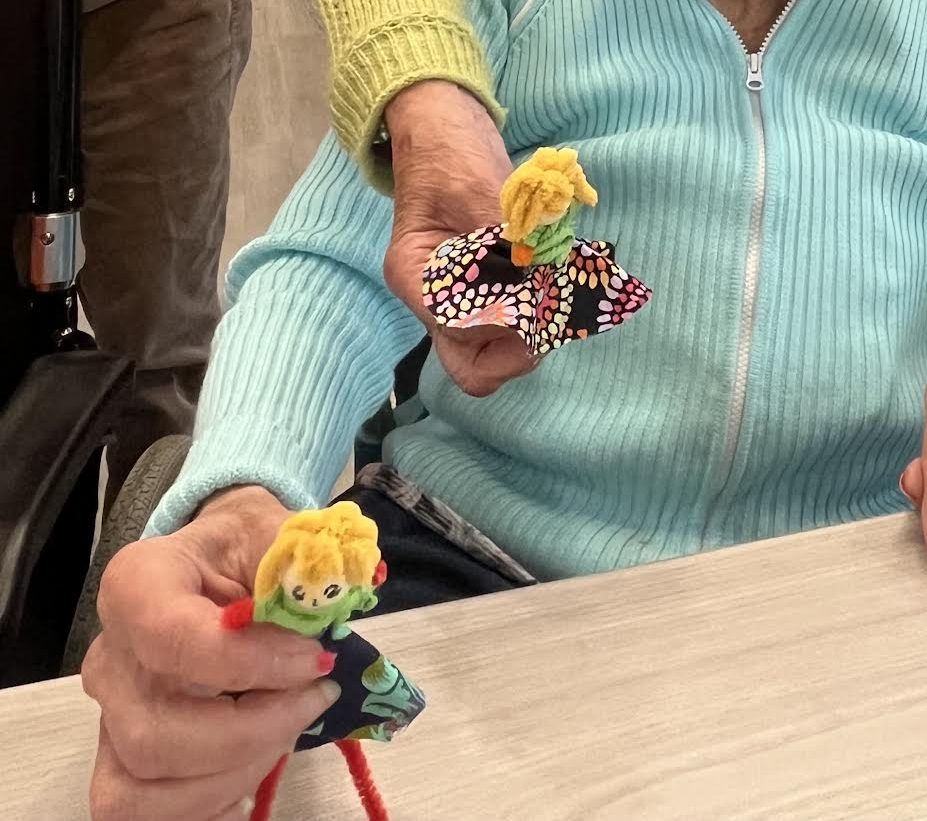
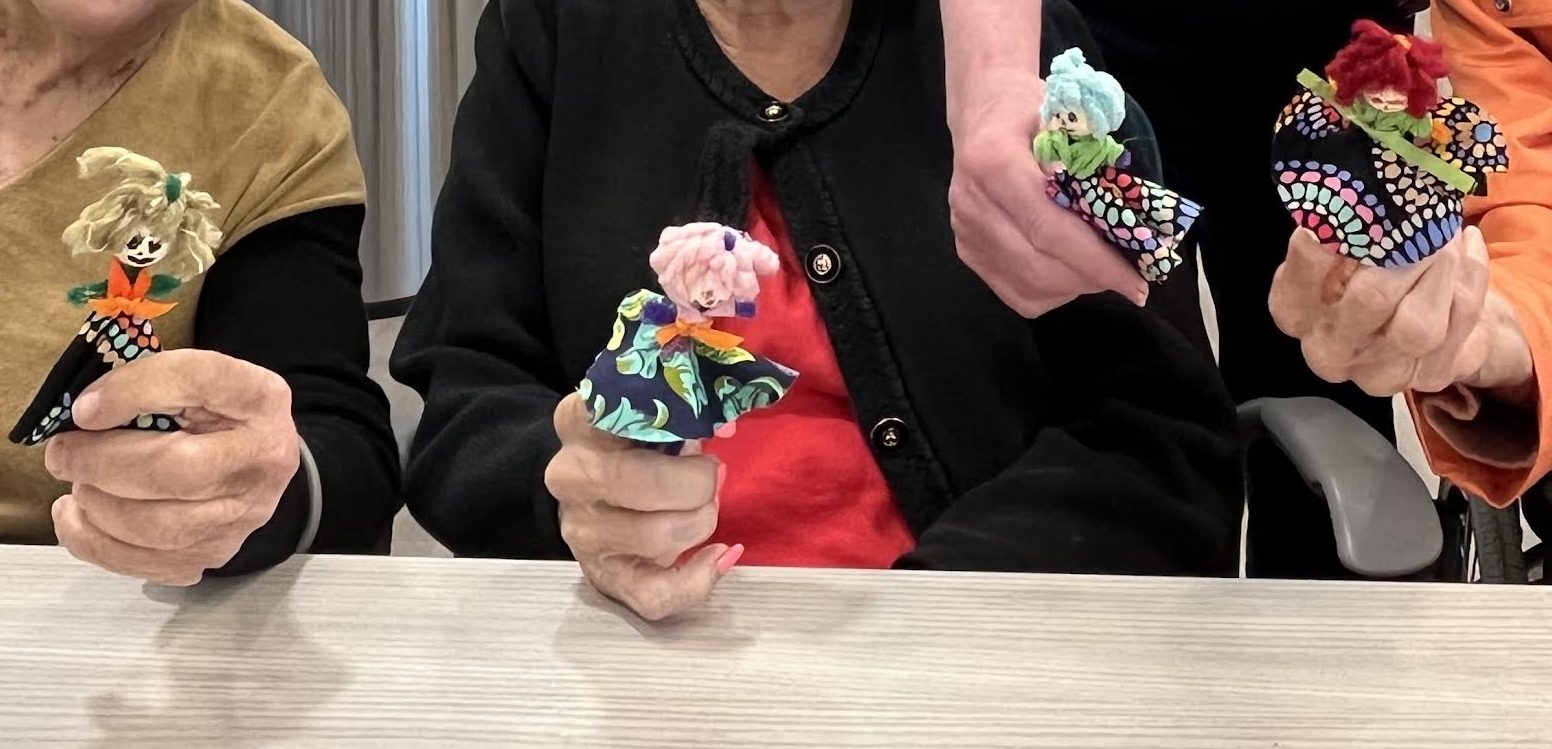
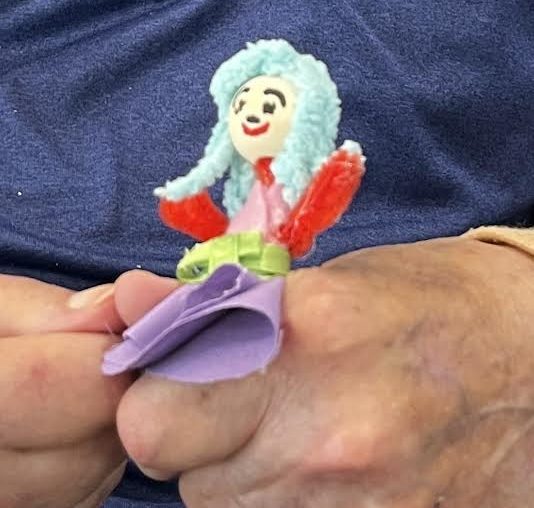
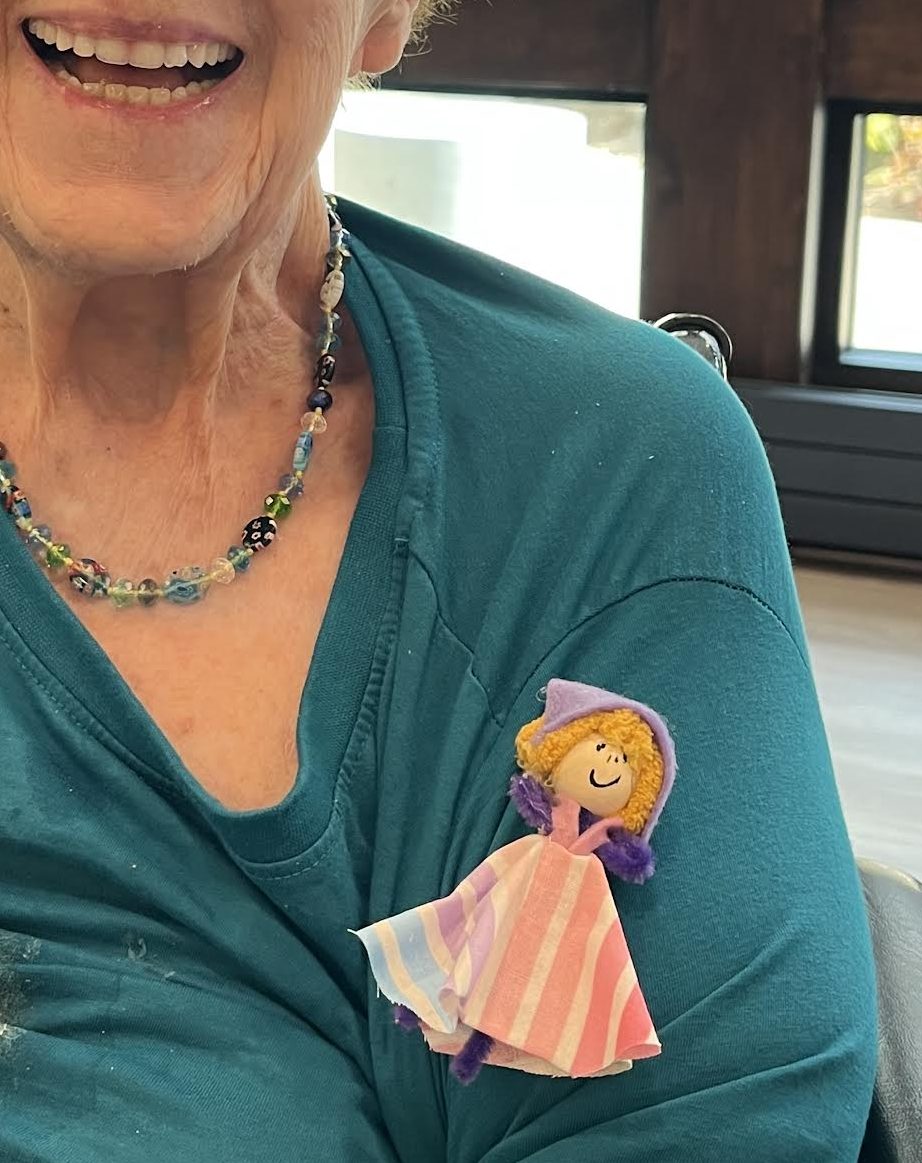
I wish I could show the faces of my residents, but I am not allowed. I had to show you the big smile on this last resident who said, “she needs a matching hat!” If I tell you this is the most engaged she has been in 11 months! She loved this project and owned her creation in a way I’ve never seen before.
Thanks for listening. Today the fabric feeling was extra special and I just wanted to share the day with you.


Love the last resident’s smile and her doll!!!
LikeLike
Wow! Thank you for sharing this with us – I hung on every word. The Observant man and the amazing smiling resident. Wow … I admire your heart and your ability to handle these situations.
LikeLike
thank you so much. It is such rewarding work. The population can be tough emotionally, but they are wonderful and so eager to create. What more could I ask for!?
LikeLike
Art and craft projects and gifts do heal! What a challenging enviornment to work in but a great way to connect with the residents. A great story and take care of yourself too!
LikeLike
Vivian, thank you. I am definitely taking care of myself and pacing things so that I don’t get overwhelmed. I love what I do and feel so lucky to be appreciated.
LikeLike
What a moving post. Like teachers, it takes a special person to work in memory care….bless you.
LikeLike
Thank you. I began as a teacher many years ago. Truth be told, this pays worse but the rewards are fabulous!
LikeLike
Thank you for sharing this. I read every word.
LikeLike
Thanks so much for stopping by.
LikeLike
I ama grateful to have a community to share with!
LikeLike
I always enjoy your writing and have missed your posts as you write so eloquently. Your perspective tends to show me what I miss – yes even with the mind deteriorating, they can have worries. What a nice project to share with them. Thank you for enlightening my day with a new post.
LikeLike
Thank you so much. My life has been too chaotic lately so I’ve unexpectedly needed to step back. I will do my best to keep a foot in the door.. I do love working with my memory seniors at work. They certainly keep me going. wishing you all the best.
LikeLike
This is a remarkable project. We could probably ALL use a worry doll. As a person with a family member in a care center (korsakoff syndrome–way too much vodka) we are grateful for the support and kindness.
LikeLike
thank you so much. I appreciate your perspective. Things are always hardest for the family members. I’m not familiar with korsakoff but certainly have worked with several former-alcoholic residents. There are over 120 causes of memory loss but alcohol is certainly one of the more tragic ways to decline.
LikeLike